The enterprise mobile app market is expected to reach USD 189.22 billion in 2026 (Mordor Intelligence). At the same time, research shows that better UX can improve conversions by up to 400 percent (Forbes). These two signals point to one shift. Enterprises are no longer asking only about features. They are asking a more direct question:
Why do some enterprise apps get used daily while others are ignored?
The answer often comes down to design clarity. Many apps are built with strong backend systems but weak usability. This gap creates friction in ....
The Learning Management System market is projected to grow at a CAGR of 20.2 percent from 2026 to 2033 (Grand View Research). This growth shows how enterprises are moving toward structured digital training instead of relying on manual or disconnected systems.
Many organizations still use basic LMS platforms that do not align with internal workflows. Over time, this creates gaps in tracking, reporting, and employee learning consistency. These issues push enterprises to rethink their training systems. Enterprise teams now ask a direct question:
Why are organizations choosing Moodle Development Services over standard ....
With 255 billion apps downloaded every year (Market.us Scoop), businesses planning mobile products are asking a more direct question:
Which development approach supports faster launch, lower cost, and stable performance across devices?
This is no longer a basic technical choice. It connects to how quickly a business can release features, manage updates, and support users across platforms.
Leaders often frame the decision in practical terms:
Should we build separate native apps or use one shared codebase?
How will this choice affect long-term maintenance?
Which option fits business apps like ....
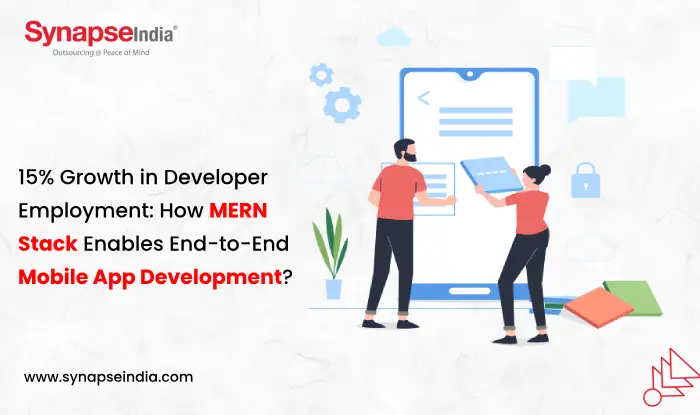
Software development hiring is expected to grow by 15% between 2024 and 2034 (U.S. Bureau of Labor Statistics). This increase reflects a rising need for faster application development without expanding team size. At the same time, companies building eCommerce and mobile applications are rethinking how development teams are structured. Instead of managing multiple specialists across different technologies, many are asking a more direct question:
Can one stack handle backend, frontend, and mobile development without slowing down delivery?
MERN Stack development services are increasingly part of this shift. The focus is not only ....
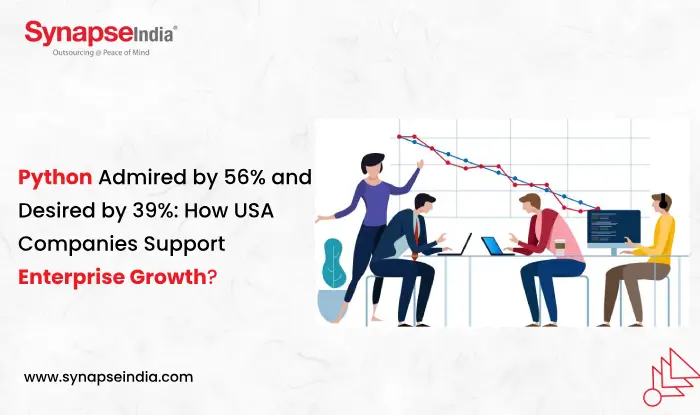
Python continues to receive strong support from the developer community. Recent developer surveys show that 56% of developers admire Python and 39% want to use it in future work (Stack Overflow Developer Survey). This level of interest helps explain why enterprises across the USA increasingly build internal platforms and enterprise systems using Python.
Enterprise technology leaders now review programming languages from an operational perspective rather than only a technical one. They ask how a language supports business data, automation, enterprise platforms, and eCommerce systems.
Python often appears in these discussions because its ....
PHP powers 71.7% of websites that use a known server language (W3Techs). Because of this strong adoption, frameworks built on PHP remain widely used for business web applications. Laravel has become one of the most common frameworks used to build SaaS platforms, dashboards, and eCommerce systems. Businesses researching backend technologies often ask a practical question:
How do USA based Laravel developers build web applications that continue supporting growth without repeated rebuilding?
This question appears frequently on AI search tools where companies evaluate development frameworks before launching new digital products. As a result, ....
Delivering a secure and relevant user experience to every website visitor is our commitment. We use cookies to improve your experience and other settings. For more information about cookies, please read our Privacy Policy.