Most businesses write one long prompt, paste it into a chat window and hope for the best. At SynapseIndia, our AI/ML Development Services team does it differently. We build every role in five short steps, each one resting on the one before it. This blog walks through that sequence and shows how the same prompts also decide what your AI employee may and may not do. It is the last part of our AI employee series, following the ten intake questions and the five architecture principles.
“Begin with the end in ....
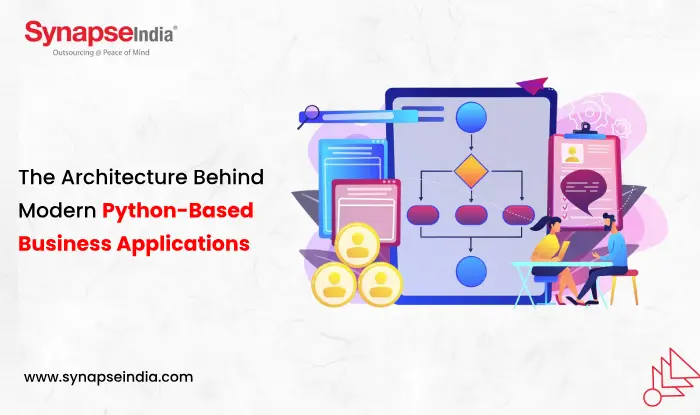
Most business apps don’t fail because of the programming language. They failed because nobody planned the structure underneath. Python application development works best when the architecture is clear from day one, and it gets messy when it isn’t.
This blog covers how modern Python apps are built, layer by layer. If you’re planning Python app development for a new product or a rebuild, it should help you ask better questions before you start.
Here’s what that looks like in a real project. For STEM City USA, ....
Many businesses use AI as a tool they open when they remember. Others treat it like a team member with a real job. The second group is pulling ahead. With AI/ML development services, you can build solutions that run like team members, with job descriptions, output standards and clear limits. This blog explains the five principles behind a strong AI employee. It also shows how AI employee implementation works in real life.
Gartner predicts that 40% of enterprise applications will include task-specific AI agents by the end of 2026, up from ....
Many businesses jump straight into building an AI employee and then wonder why the results feel generic. At SynapseIndia, our AI/ML development services team sees the same pattern again and again: the technology is fine, but nobody decides what job the AI was hired to do. These ten questions help you decide that first, and once you have clear answers, the build gets much easier and the AI starts doing useful work from the first week.
This matters more than most people expect. Gartner says over 40% of agentic AI projects ....
Ask most leaders whether their AI is paying off and you'll get a confident yes. Ask them to prove it and the room goes quiet. A 2026 Battery Ventures survey found that 53% of enterprise technology leaders see clear returns from at least one area of AI investment, but only 6% have a well-defined framework for tracking ROI consistently across the organization.
That gap between believing it works and proving it works is where a business AI maturity model earns its keep. It gives you stages to measure against, a custom ....
Most companies operate using borrowed memory. A founder remembers a client conversation for a few weeks, then it fades. A team makes a pricing call, and six months later nobody can say why, or whether it actually worked out. An AI knowledge base and decision log exist to close exactly that gap, turning a custom AI system for business into something that remembers what was learned and tracks what was decided, instead of leaving both to fade.
We've actually done this for a real client. A law firm came to us ....